{:es}Muralla de Segovia{:}{:en}Wall Of Segovia{:}
{:es}
Muralla de Segovia
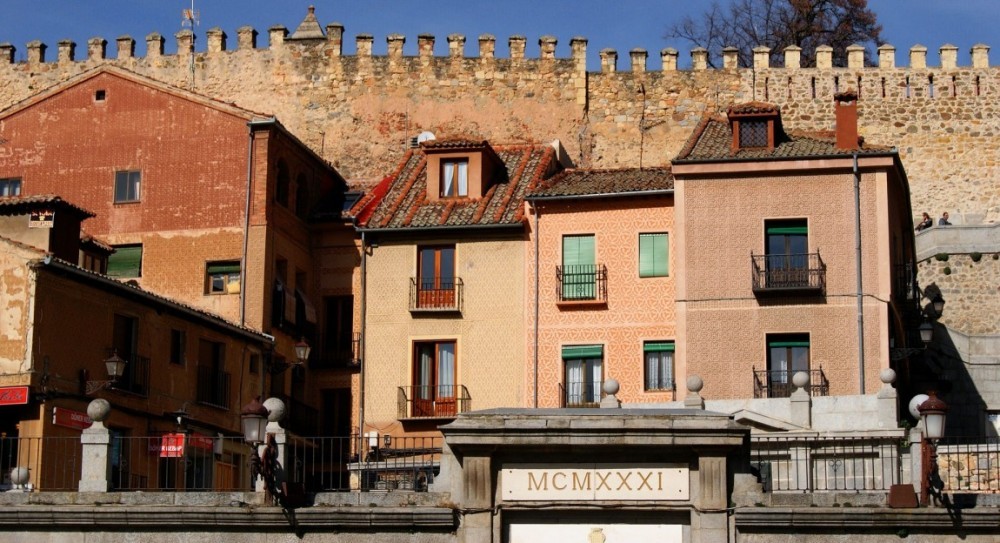
La Muralla de Segovia ya existían cuando Alfonso VI de Castilla arrebató la ciudad a los árabes. Mandó ampliarla, de tal forma que llegó a tener un perímetro de 3 kilómetros, ochenta torres, cinco puertas y varios portillos. Su construcción se realizó principalmente con sillares de granito, aunque también se reutilizaron lápidas de la necrópolis romana.
Construcción y materiales de la Muralla de Segovia
La muralla de Segovia está ejecutada mediante técnicas tradicionales tales como la mampostería ordinaria, en otros, con tapial de piedra con encofrados de madera y en otras zonas en el encofrado formado directamente por una fila de mampostería correctamente trabada. La argamasa es cal y arena, arena de baja calidad con un alto contenido de magras y limos, motivo por el cual, observamos que predomina el color rojizo.
{:}{:en}Wall Of Segovia
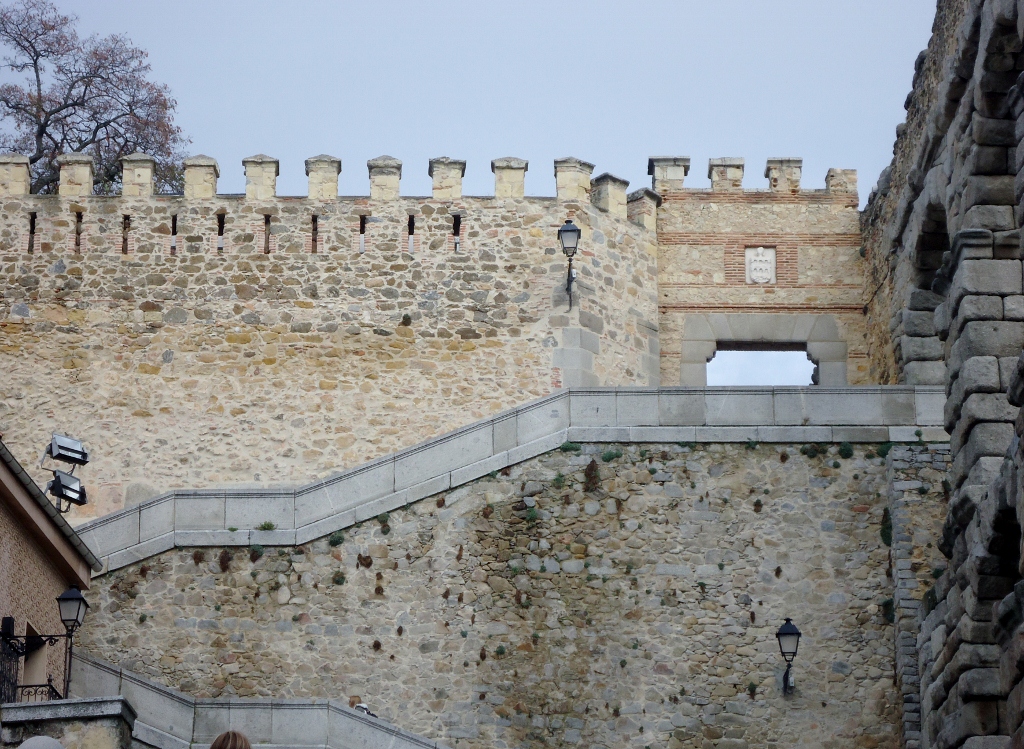
The wall of Segovia already existed when Alfonso VI of Castile took the city to Arabs.
Sent to expand it, reaching a radius of 3 kilometers, eighty towers, five doors and several gates. Its construction is carried out mainly with blocks of granite, although also is reused tombstones of the necropolis Roman.
The wall runs through the old town, and currently retains three gates: San Cebrián, Santiago, and San Andres. This last was gateway to the Jewish quarter. Retains also the gates of the consolation, of San Juan, of the Sun and of the moon. The loss of the defensive value of the wall during the 16th century influenced the urban planning of the city, as they were built houses attached to it and even on her.
Starting from the century XVII, the doors and their labors of portazgo is abandoned. The wall then lost its defensive, territorial and symbolic value. During the 19th century the wall is already considered as an urban nuisance and its demolition served in some cases as an excuse to reduce the labor stoppage. In the century XX brings a change of mentality and with it, the need of keep and rating the wall is makes patent. It then starts a continuous work of restoration and conservation, arriving to our days.
In 1941, all old part of the city within the old walled enclosure is declared historic-artistic.
Construction and materials
The wall of Segovia is executed using traditional techniques: ordinary masonry, in others, with mud of stone with wooden formworks and other areas in the formwork formed directly by a row of masonry properly locked. The mortar is lime and sand, sand of low quality with a high content of lean and silt, reason by which, observed that predominates the color reddish.
{:}